What is Rapport, Really, and How Do We Attain it?
When we seek to find out what a patient needs, we utilize subjective and objective means. Pulse and tongue readings, facial diagnosis, odor, color, sound, emotion, body constitution, blood pressure, temperature, palpation, pain scales, range of motion measurements, biomedical tests… the list goes on. Those objective and subjective measures are invaluable, yet many of us have experienced times when we’ve had all the facts, and still knew that our patient needed something deeper; we’ve also experienced times when we felt we couldn’t quite reach what that patient really needed in order to heal.
Whether or not we’re aware of it, how we feel when we’re with that patient plays a large role in establishing and maintaining rapport. How do you feel when that patient walks in, sits down, looks at you? Do you feel a unity with this person, a connection that erases the walls of the room, erases time and circumstance and brings the two of you to a timeless, shapeless moment? This moment is rapport. But how can we attain it, effortlessly? Think of a time when you felt in concert with another person. It could be a moment, some hours, or you could remember it as coming and going. Tap into that memory and truly feel it now. These are actually the moments we all live for: to be seen and witnessed, to see and hold space as witness. It is the tiny spark of knowing that someone saw right into you and held you safe and non judged, and that same moment, you were trusted to see right into them, as safe as you felt. This moment feels like magic, or love, or awe, or something we can’t find a word for, but it’s unmistakable.
Let’s contrast what rapport isn’t. Rapport isn’t asking a lot of questions and cataloging symptoms and details. It isn’t being a good conversationalist or being charming or impressive or knowledgeable or entertaining. It’s not a skill test to show how well you remember the facts of one’s life, and it isn’t about being a good technician, though all of these are important aspects to our professional success.
Rapport is the shapeless, speechless space where two or more beings meet. This space can be large or small, expansive or microcosmic; it can inspire words or create reverent silence, but it is, in its essence, profound, recognizable and is the spark of acknowledgement of existence itself. When we meet someone for the first time, we often shake hands. If your partner’s hand is soft and weak in its grasp, we do not (knowingly) crush them with your strength, and if the other person crushes, our tendency is to pull away. In this example, you have not met. However, if you extend your hand and grasp the other person’s, and are met with an awareness of presence, you naturally adjust your grasp to be well matched, and in that shapeless, speechless, tiny moment, there is a spark. You simultaneously look into each other’s eyes and without any further need for words or effort, you know that you have met. It is a rewarding moment. The speech comes naturally after that, and even if you speak different languages, you know that you have an understanding between you. You have seen and have been seen. You have understood and have been understood. You form a cord of energy between you and you are connected.
With patients or anyone, for that matter, rapport isn’t always as quick or simple. What to do with the patient who pulls away? The one who crushes you, with their handshake or otherwise with their words, attitudes, demands or emotions? What of the one who reminds you of an unpleasant situation in your life? It is my opinion that if we can’t allow for the space to get far enough past these limitations for them to reveal and trust us with their truths, we are only technicians for them, and they are more likely to leave the clinic feeling little difference from when they arrived, no matter how stellar our treatment was. This is where a deeper understanding of rapport comes in.
We, as practitioners, must learn to let go of our ideas of ourselves, our knowledge and our own reactions and center ourselves on the idea of each patient. It’s a matter of presence coupled with curiosity and a willingness to not know what might evolve next. Each patient that walks in, whether or not we’ve met them before, needs to be seen, truly seen, recognized, acknowledged, held safe, and truly understood. The treatment room is not our stage; it is the patient’s stage and it is up to us to give that patient the fullness of allowing themselves to be seen, heard, understood and loved. Every patient arrives with a unique set of circumstances governing their day, their moment. Each moment is new and has a life force all its own. We, as practitioners, have an immense amount of knowledge, training and experience, and yet, when it comes to rapport, each moment must be new.
When we are in rapport with the patient, we are in that new moment. It’s similar to musical improv or any other sort of improvisation. We’re present in the moment, holding an emptiness, a space into which the patient can unfold so the two of you can create the unique music of that treatment. This isn’t to say that you don’t have a treatment plan in mind, or you “make it up” every time your patient comes in. It’s more akin to having that professional plan, and then allowing it to be modified based on what your moments of rapport reveal. To arrive here, we utilize our senses, not our minds; our intuition, not our intellect. Bedside manner has little to do with it. No matter how polite or professional, if we do not attain the magic of that moment, we are not in rapport. When we use our senses and intuitions, we can see the patient as a whole, complex and beautiful being. No one wants to be anything less than that. As practitioners, we can provide that forum for each patient, and as we envision them in their most balanced, expansive and harmonious state, we create the stage for them to emerge into themselves. How we attain these moments of true rapport will be unique to you and your patient, and there are as many ways to arrive at that moment as there are individuals, but below are some suggestions that may help you begin.
We can start with emotion. Not extreme emotion but the nuanced emotional shifts that occur even in the course of one simple conversation. In the model of five element theory, each patient will have, inherent to their nature, a preferred or predominant emotional source from which they relate. Every person utilizes all emotions, never ending, but there is one emotional aspect that will show a predominance in each individual. There will also be a sound and perhaps a body language that goes with it; a way of speaking and relating that emphasizes this emotional source. As we let go of our minds (think of the jazz improv artist), we are able to see, hear and feel these things as clearly as when we are in nature and have let go of all the duty, mental processing and rushing of a day’s life. Yet it is not observation alone. We must interact with the patient and draw out their true nature so they may blossom and flower. As we interact with the patient, we utilize each of these emotions in ourselves in order to create a space where the patient feels comfortable utilizing them also. We lead the way by showing it is safe to express any emotion and the patient need not be held to courtesy but is given permission to bloom with their preferred form of expression. It’s not about our preference, opinion or judgement, it’s about us being vessels of a gorgeous, safe space in which we allow the patient the opportunity for full occupation. A patient who prefers to be direct and assertive will not feel as much themselves if we are relating to them with softness and sympathy. A patient who longs to be soothed will not will not feel well cared for if we are speaking to them with strong assertion or making light of their situation.
When we provide the unspoken permission to freely express, patients will flow into their own expression. When we limit ourselves to our preferred manner of expression, we limit our patients, and therefore our treatments. Patients coming to us will expand and bloom, or give up, depending whether or not they feel safe relating in their natural manner.
How do we lead the way and create this safe space for our patients? We must first become comfortable expressing through our own emotions, becoming more present and less lost in our own habitual patterns. We must practice stepping outside of ourselves and our little boxes of comfort and learn to recognize how utilizing all of our emotions affects us and others. We must practice. Next time you’re in the grocery store, relate to the checkout clerk. Ask a simple question, like, “how has your week been?”. Listen and feel. Are they direct and clear? Somewhat angry or annoyed? Superior in attitude, as though to say, “what business is it of yours?”, or do they answer your question with somewhat of a plea for understanding; perhaps they make a joke. Feel this out, and respond in kind. Make a joke back, emphasize how sorry you are that their week has been rough, use your ability to feel angry and annoyed and respond with something like, “UH!! Aren’t weeks like this the pits!”, and so on. It feels “put on” at first, and you’ll likely feel quite awkward and fake, but over time, you’ll develop your ability to very comfortably feel all of your emotions and ways of expressing, which are not fake at all. In fact, as you practice this, you’ll find yourself becoming more authentically you. It’s quite a nice benefit. Remember that we are utilizing the five emotions associated with the five elements: joy/lack of joy (Fire), sympathy(Earth), grief (and the need to feel valued) (Metal), fear/lack of fear (and the need to feel reassured) (Water), and anger/lack of anger (read frustration here also, and the need for clear direction) (Wood). Practice this with your patients as well. You won’t get it right at first! Don’t worry. If you go down one avenue and your patient looks at you like you’ve lost your wits, immediately go down another avenue, then another if needed. When you hit the right one, you’ll see your patient relax and respond with ease. That’s your moment. One moment of rapport. Well done! Keep practicing and keep collecting one moment, one moment. Over time and with practice, we begin to lose the shield of ‘us and them’ and begin to see the world as ‘we’. In practice, this becomes rapport. If this feels to “put on” to you, there is an even more direct path to rapport: be authentically you, and listen with your senses. When we listen with our senses rather than our minds, we feel, hear and see, truly see the patient. Our responses to others become authentic, full of curiosity, genuine and with heart, rather than mind or thought.
Our patients come to us in need. We need not hold them responsible to shoulder all the burden of navigating their way through perhaps layers of confusion to get to the root of the matter. We also shouldn’t burden them with our problems or process. It’s very important that we leave our current issues out of the room. When we bring in our current processes, patients will feel a natural desire to “hand over” their treatment time to help us. My two part Ethics course covers these sticky situations in greater depth.
When we create the space of rapport, we can help patients cut through many of these layers, to a space where they can be themselves and express to their potential in a given moment. Often they will describe to you the actual points they need. This is because they are now able to express and ride the wave of their own intuition. In this article are just a few examples of how to learn to achieve deeper rapport. There are many other ways as well, too many for this article. Remember this: The goal is unity (becoming one), not parity (being equal).
And please remember that we don’t heal patients. Patients heal themselves. All healing is self-healing. How do they do that? By remembering that they are already whole, even in the presence of, say, incurable disease. We are vehicles and catalysts in helping them clear away the impedances to their ability to reconnect with that wholeness, and heal. This is why rapport, as described here, is so very important. Rapport, which, when that connection is unencumbered, is the same as unity. It allows both the practitioner and the patient arrive at a knowingness that allows for us to treat with our full being (mind, heart and spirit connected with our professional knowledge), and for patients to receive, to their fullest abilities, the benefits of the treatment. Sometimes rapport is a treatment in itself.
Related to This Article
Ethics in the Field of Acupuncture, Beginner Course
This is a Beginner Course on Ethics principles for Acupuncture.
More InfoAbout the Author
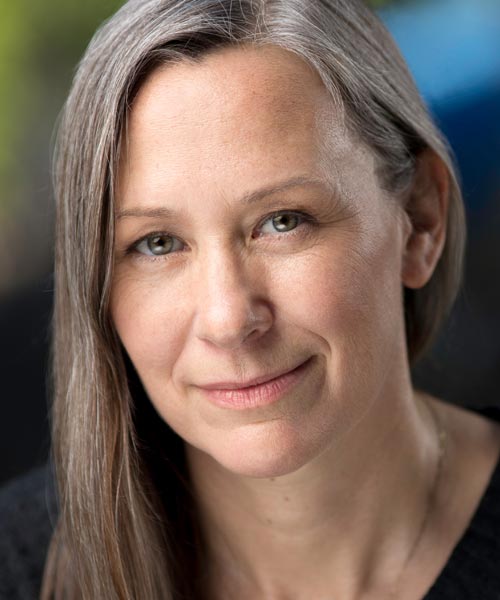
Mary McCullough
Dr. Mary McCullough has been in practice since 2009 and has been practicing Classical Five Element Acupuncture (CFEA) since 2014. She's taught both TCM and CFEA, most recently as Senior Faculty at the Institute of Classical Five Element Acupuncture in California.
Other Courses By This Teacher
Overview
Actions and decisions are either ethical or they are not, no matter how varied the situation. This Advanced Course is an in-depth discussion of ethics in relation to maintaining your Acupuncture practice, growing into your own professionalism and your ongoing role as a representative in the field. It provides guidelines for those areas that become more of a gray-zone once you’ve been in practice for some time.
This course also brings into discussion social media and public image, teaching and mentoring, expanding or cutting back on your practice, collaboration and patient management. Using the base principles of Aristotle’s discourse on ethics and the Declaration of Geneva, this course takes you out of the theoretical realm and into the nuts and bolts of how we handle patients and ourselves in real time as dynamic, caring, and evolving people.
Mary’s lecturing style is accessible, clear, friendly, and penetrating. She delivers the information with relatable examples from real life and applies the core principles of ethics in a way that brings out your confidence in knowing how to appropriately balance passion and caution.
Learning Objectives
- Students will learn how to apply core principles of ethics to deal with more complex situations in practice.
- Students will gain understanding of ethics as applied to a sustained and mature practice.
- Students will learn how to grow their practice and professionalism from a strong center of ethical integrity.
Your Teacher
Mary McCullough
Dr. Mary McCullough has been in practice since 2009 and has been practicing Classical Five Element Acupuncture (CFEA) since 2014. She's taught both TCM and CFEA, most recently as Senior Faculty at the Institute of Classical Five Element Acupuncture in California.